The pitch that works: find the business's leak (missed messages, slow replies), demo a bot loaded with their own info, price it against a part-time hire instead of against software, and ask for a 30-day pilot. Never open with the technology.
That's the whole method. Here's what it looks like in the wild, and why the order matters.
I watched someone pitch an AI agent to a restaurant owner once. He opened with "so it's powered by a large language model with function calling and..."
The owner's eyes glazed over in four seconds. Four. I timed it.
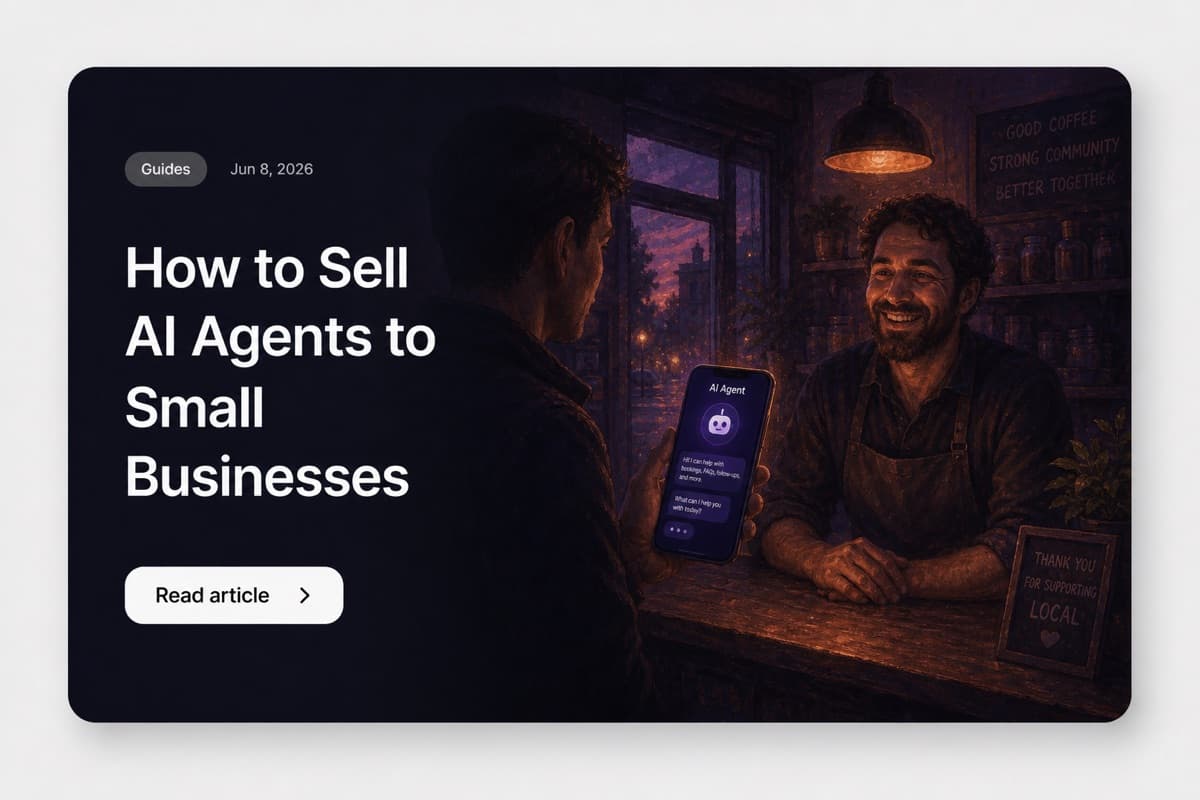
Then I watched a different person pitch the same week. She opened her phone, showed a chat where a bot booked a table, answered "do you have gluten free options", and handled a complaint, all in 20 seconds. The owner grabbed the phone and started typing his own questions.
He signed two weeks later. Same product. Different sale.
Rule one: the owner doesn't care about AI
Small business owners are drowning. Missed calls, unread DMs, a Google inbox they check twice a week, reviews they're scared to look at. They don't want technology. They want the drowning to stop.
So you never sell "an AI agent". You sell:
"Every message gets answered in under a minute, even at 2am."
"You stop losing the leads that message you after closing time."
"Your front desk stops answering the same 12 questions on repeat."
Notice none of these sentences contain the word AI. The tech is your implementation detail, not their reason to buy.
The pitch structure (steal this)
1. Open with their leak, not your product. Before any meeting, message their business like a customer. Ask about pricing. Ask about hours. Do it at 9pm. Then in the meeting: "I messaged you Tuesday night asking about pricing. I got an answer Thursday afternoon. How many people just go to the next place on Google instead of waiting?" Now you're not a vendor. You're the person who found the hole in their boat.
2. Show, immediately. Have a demo bot loaded with THEIR info. Their hours, their services, their FAQ, scraped off their own website in ten minutes. Hand them your phone, let them ask it anything. This is the whole sale right here. When they ask it a question and it answers correctly about their own business, something clicks. They stop evaluating and start imagining.
3. Make the price a comparison, not a number. Never say "$500 a month" into silence. Say "a part-time hire to cover your messages runs about $1,500 a month and covers maybe 25 hours a week. This covers all 168 and answers in seconds, for a third of that." Same number, totally different feeling. (If you haven't set your own tiers yet, here's the pricing math that works.)
4. Shrink the first yes. Don't ask for a year. Ask for a pilot: "Let's run it for 30 days on your web chat. If you don't see the missed messages drop, turn it off, no contract." A small yes today beats a big maybe forever. And once it's live and answering their customers, turning it off feels like losing something. That works in your favor, ethically: the thing actually has to be good.
The objections you will hear (every single time)
"What if it says something wrong?" Don't dodge this one, it's the real fear. Answer: "It only answers from the info you approve, and anything it's unsure about goes straight to you as a message. Want me to show you what happens when someone asks something off-script?" Then show the handoff. The handoff demo kills this objection better than any promise.
"My customers want to talk to a real person." Agree, then reframe: "Totally. And right now at 9pm they're talking to nobody. The bot isn't replacing you, it's covering the hours where the alternative is silence." You're not against humans. You're against voicemail. (The AI employee vs virtual assistant breakdown gives you the full version of this argument.)
"We tried a chatbot before, it was useless." They're probably right, it probably was. Old rule-based bots were awful and everyone remembers. Say so: "Yeah, the old ones were decision trees in a trench coat. Ask this one something weird." Then let them try to break the demo. Letting a skeptic stress-test it converts them harder than any pitch.
"I need to think about it." Fine, but leave the demo running. "No problem. I'll leave this test version live on your site for the week, watch what it catches." You've just made the cost of saying no visible. Every lead it catches that week is your closer working overtime.
Where new sellers blow it
They pitch features. Integrations, models, tokens. Nobody cares. Pitch outcomes and lost revenue recovered.
They target too broad. "Any business" means no business. Pick one niche, learn its top 10 questions, and your demos start feeling psychic. A bot that already knows what "do you take walk-ins" means in a barbershop context sells barbershops.
They promise magic. Don't say it handles everything. Say it handles the repetitive 80% and routes the rest to a human. Honesty about the limits builds more trust than hype, and trust is the actual product when you're asking a small business to put software in front of their customers.
They can't deliver fast after the yes. This one's quiet but deadly. The close creates a window of excitement. If setup takes you three weeks, the excitement dies and buyer's remorse moves in. The agencies winning at this go live within days of signature, sometimes same-day, because their delivery is a repeatable flow instead of a custom project every time.
The mindset shift
You're not selling software to people who want software. You're selling relief to people who are tired. The owner answering Instagram DMs from bed at midnight isn't your prospect because of AI trends. She's your prospect because she's exhausted.
Find the leak. Show the fix working on their own business. Compare the price to a hire, not to software. Ask for a small yes. Then deliver fast enough that the yes never gets a chance to cool off.
Spin up your demo bot free from a template, and have something to show before your next pitch.